



Outdoor Almanac
June is when Massachusetts truly tips into summer. The solstice arrives on the 20th, days are long, and the natural world is in full swing. Young animals are finding their footing, from fledgling birds leaving the nest to coyote pups venturing out for the first time. Coastal and inland habitats alike are busy with activity, and the nights are as worth watching as the days. Read on for what to look and listen for this month.
What will you discover this June? Visit a nearby wildlife sanctuary or join a program to make the most of your month.
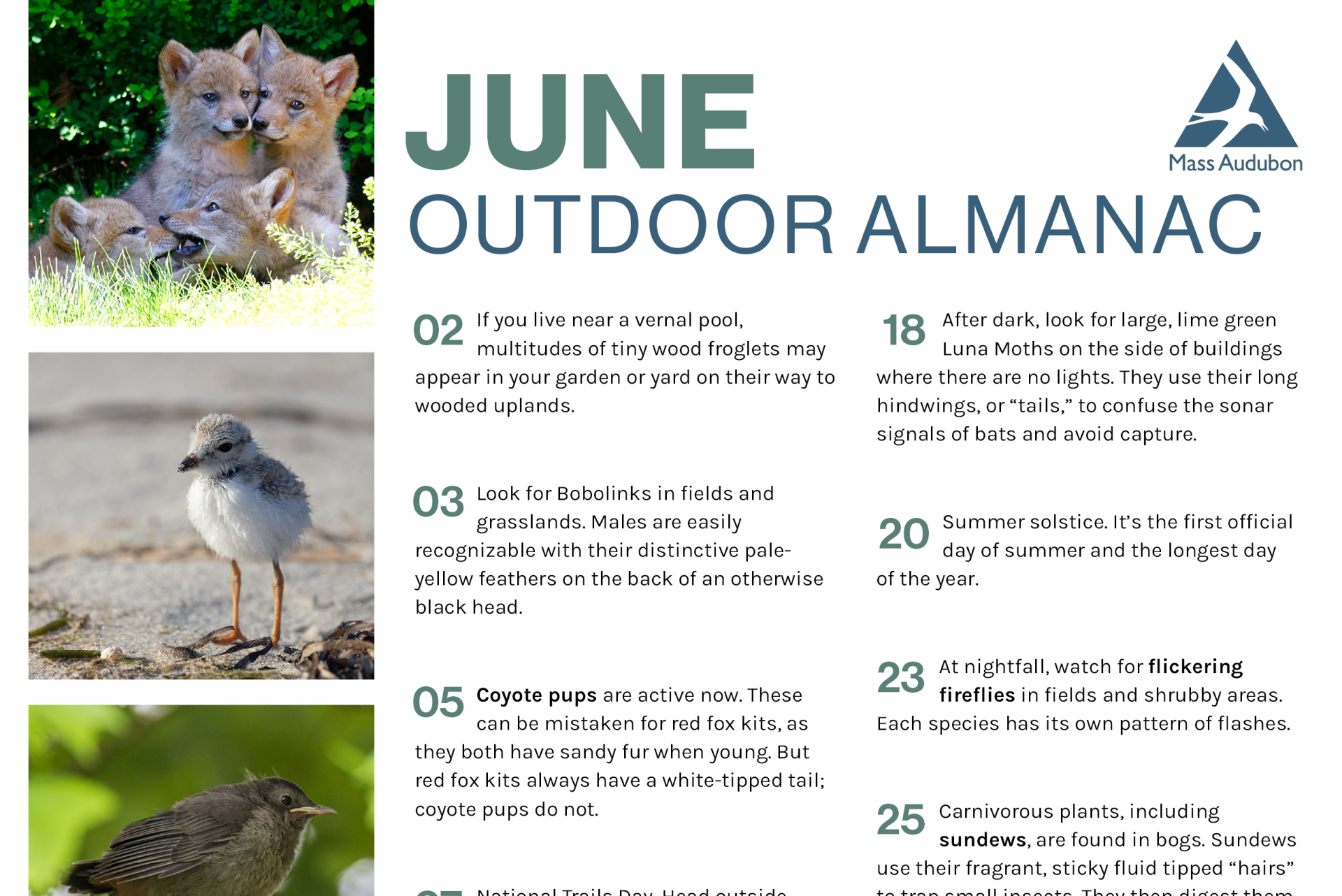
Outdoor Almanac
Download or print this month's outdoor almanac.
JUNE
2
If you live near a vernal pool, multitudes of tiny wood froglets may appear in your garden or yard on their way to wooded uplands.
3
Look for Bobolinks in fields and grasslands. Males are easily recognizable with their distinctive pale-yellow feathers on the back of an otherwise black head.
5
Coyote pups are active now. These can be mistaken for red fox kits, as they both have sandy fur when young. But red fox kits always have a white-tipped tail; coyote pups do not.
7
National Trails Day. Head outside and explore a new trail or a familiar favorite.
8
World Ocean Day. Celebrate by enjoying some of Massachusetts’ beaches. Keep an eye out for sandy-colored Piping Plover chicks running between the shoreline and their nests.
12
The larvae of Baltimore Checkerspot Butterflies are feeding and pupating—the beautiful black and orange adults emerge about 10 days later.
14
Watch for Snapping Turtles crossing the road. This time of year, the females emerge from their resident ponds, particularly during rainy days, just long enough to dig a hole and lay eggs before returning to the water.
18
Young birds begin to leave their nests about this time. They often have some downy fuzz left and are still attended to by their parents, but they will soon be on their own.
20
Summer solstice. It’s the first official day of summer and the longest day of the year.
23
At nightfall, watch for flickering fireflies in fields and moist shrubby areas. Each species has its own pattern of flashes. This June, we're going wild for fireflies
25
Carnivorous plants, including sundews, are found in bogs. Sundews use their fragrant, sticky fluid tipped “hairs” to trap small insects. They then digest them with specialized enzymes.
27
After dark, look for large, lime green Luna Moths on the side of buildings where there are no lights. They use their long hindwings, or “tails,” to confuse the sonar signals of bats and avoid capture.
29
Full moon.
Upcoming Programs this Month
See MoreA Nature Year at North River Wildlife Sanctuary: Summer (3 Months)
-
North River Wildlife Sanctuary, Marshfield
-
3 classes starting
Friday, June 12
10:00am-12:00pm
Adults
Summer Nature Hike
-
Blue Hills Trailside Museum, Milton
-
Friday, June 12
3:30-5:00pm
Families - children 0 - 17
Pan in the Park Jamboree
-
Magazine Beach Park Nature Center, Cambridge
-
Friday, June 12
4:00-8:00pm
Adults & Families - 0 - 17
Early Bird Walk at Long Pasture
-
Long Pasture Wildlife Sanctuary, Cummaquid
-
Saturday, June 13
7:00-9:00am
Adults
Saturday Morning Bird Walk
-
Blue Hills Trailside Museum, Milton
-
Saturday, June 13
7:30-9:00am
Adults
Spring Bird Walk
-
Boston Nature Center and Wildlife Sanctuary, Mattapan
-
Saturday, June 13
8:00-10:00am
Adults
Stay Connected
Don't miss a beat on all the ways you can get outdoors, celebrate nature, and get involved.