


Coastal Waterbirds
Protecting breeding and migration areas for coastal waterbirds throughout Massachusetts.
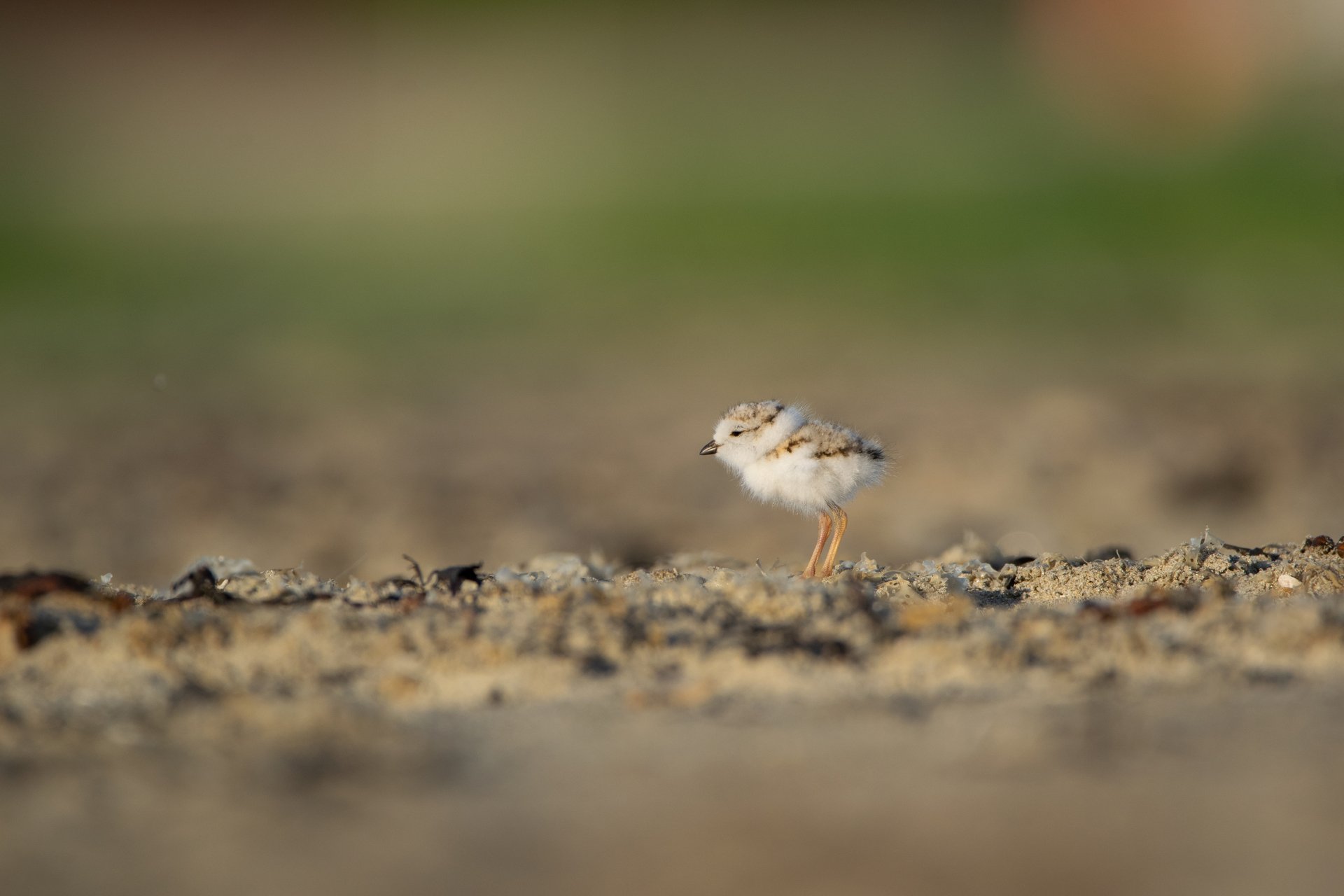
Mass Audubon's Coastal Waterbird Program (CWP) is one of the most effective entities working to protect coastal birds and barrier beaches in North America. The CWP was first launched in 1986 in response to declining populations of Piping Plovers—newly listed that year under the Endangered Species Act—and terns in Massachusetts.
In partnership with federal, state, and municipal agencies (along with private landowners), the program helped to recover the number of nesting Piping Plovers in the state from 135 pairs in 1986 to 1,200 pairs in 2024—more than 50% of the entire Atlantic Coast population.
Program Overview
The CWP currently protects over 140 miles of Massachusetts coastline each year. The program focuses on protection of the most threatened species of coastal birds, and more broadly on coastal ecosystem management. The CWP serves as a model for integrated coastal resource management.
How You Can Help Coastal Birds
Your support is critical to the success of this program! if you have equipment that you are no longer using, please consider donating it to our program. Email us for more information. We especially need binoculars, scopes, kayaks or boats. Or, you can make an online donation directed to the Coastal Waterbird Program.
2025 Season Highlights
Last year, Mass Audubon’s Coastal Waterbird Program protected threatened coastal birds through management and education at 205 sites along 138 miles of the Massachusetts coastline. Download the report for a summary of the season.
CWP Impacts
Through a combination of wildlife management, science-based conservation, policy development, and education initiatives, the program manages the conservation of approximately:
-
30-40%
of the state's Piping Plovers
-
40-60%
of the state's Least Terns
-
30%
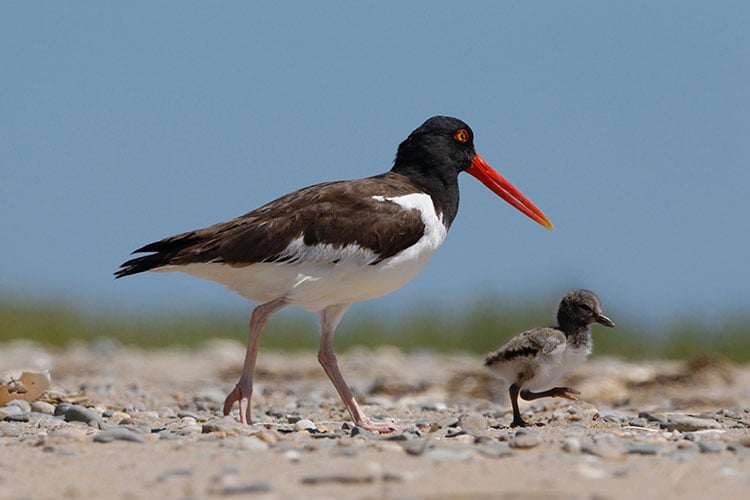
of the state's American Oystercatchers
Conservation & Management Techniques
Mass Audubon's Coastal Waterbird Program (CWP) monitors and protects more nesting sites on the Atlantic coast than any other non-governmental entity. Every year, from March through September, we utilize a variety of management techniques to protect nesting and migratory coastal birds from human disturbance and predators.
CWP's wildlife management techniques include:
- symbolic fencing
- signage
- electric fencing
- exclosures
We also consult with beach managers, local landowners, and permitting agencies on projects such as:
- dredging and beach re-nourishment
- off-road vehicle use
- beach raking
- fireworks
We also undertake management research to advance conservation objectives including developing best practices in bird and habitat protection. A good example of this is the program’s intensive study to understand movements and post-breeding habitat use of Roseate Terns, in partnership with USGS Patuxent Wildlife Research Center.
Our work indicates that the majority of the endangered Northwest Atlantic Roseate Tern population stages (readies for migration) in southeastern Massachusetts—specifically on outer Cape Cod and Nantucket beaches. The study has provided important data for policy making and offshore energy siting.
Seasonal Field Staff
The Coastal Waterbird Program has trained and mentored over 1,500 field staff over the past 35 years, conducting hundreds of educational programs on beaches, at schools, and for the general public. In addition, we have worked closely with beach managers and policy-makers to provide information on coastal waterbird protection.
CWP welcomes early career nature enthusiasts for a summer of fieldwork, training, and mentorship. You don’t need any experience with fieldwork to join as a field assistant. In fact, all you need to apply is an interest in protecting coastal species and habitats, and a willingness to get sandy on the job.
In their first year, field assistants will get hands-on experience in the field, conducting research, monitoring listed species, and deploying public education to reduce human disturbance at nesting sites. Many staff members spend multiple summers with the program, joining as a field assistant and using the skills they learned in their first year to return as a field technician and again as a crew leader.
Seasonal Staff will work out of a base at one of the following locations. Housing options may be available for field staff as well.
- Long Pasture Wildlife Sanctuary, Barnstable, MA
- Allens Pond Wildlife Sanctuary, Dartmouth, MA
- Wellfleet Bay Wildlife Sanctuary, Wellfleet, MA
- Lost Farm Wildlife Sanctuary, Nantucket, MA
- Felix Neck Wildlife Sanctuary, Edgartown, MA
- North River Wildlife Sanctuary, Marshfield, MA
- South Beach, Chatham, MA
Partnerships
The Coastal Waterbird Program has assisted over 500 different landowners (private, municipal, town, state, and federal) with management guidelines to ensure the preservation of critical habitat.
Our long-term collaborative research programs—including new region-wide efforts to increase the productivity of American Oystercatchers—have been critical to the success of the program.
Because of our work with partners such as the Massachusetts Department of Conservation and Recreation, the CWP is able to focus on factors affecting reproductive success at local and larger scales, enabling us to consider regional ecological changes such as sea level rise.
None of this work would be possible without the consistent and generous support of many members, foundations, government agencies, and the hard work and dedication of the many conservation professionals who have worked with Mass Audubon.
Take Action
We need your curiosity, commitment, and passion to ensure that our lands become more resilient, that more people than ever experience the magic of nature, and that we fight climate change—now and in the future.
Stay Connected
Don't miss a beat on all the ways you can get outdoors, celebrate nature, and get involved.